Herons
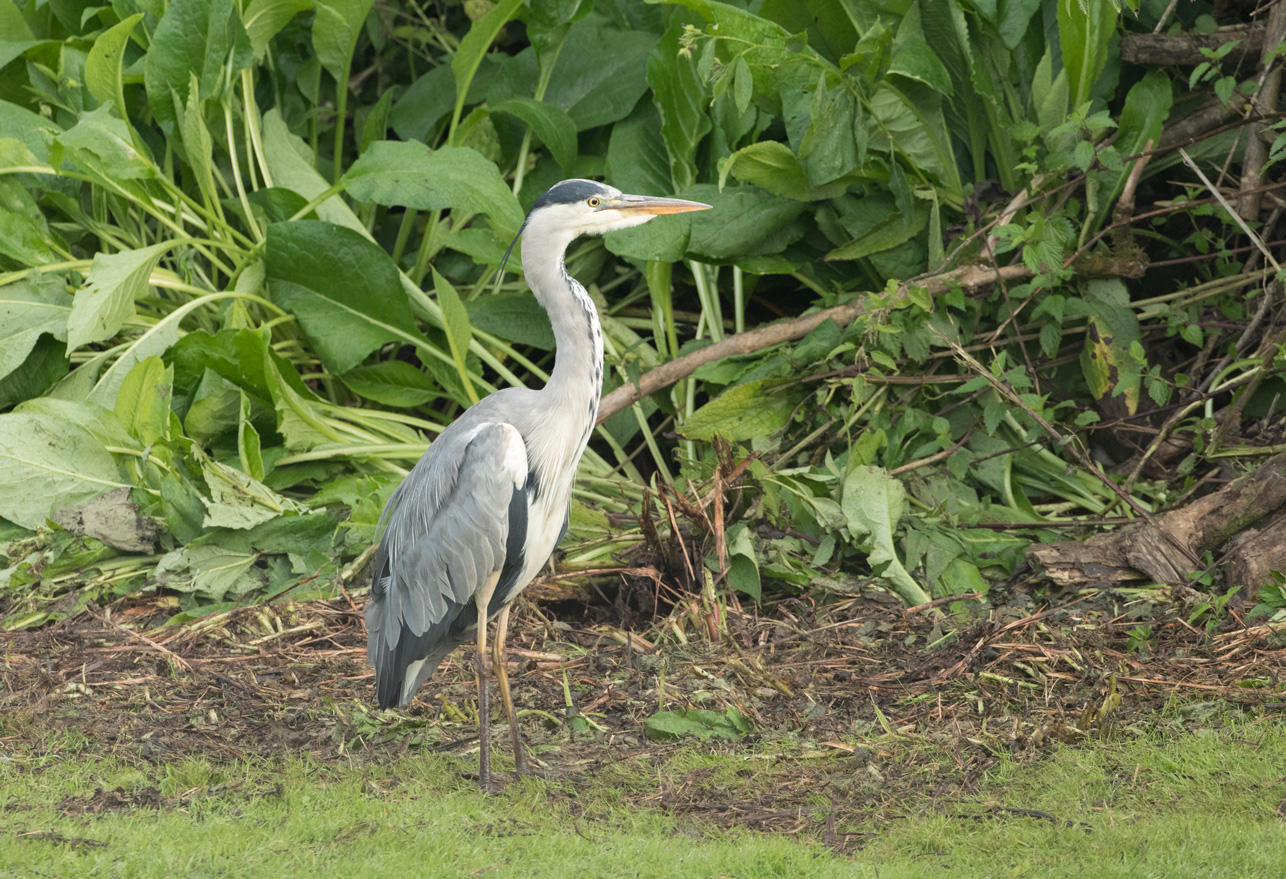
There are herons in Yorkshire, and they can be seen on rivers, lakes and ponds, as well as resting in fields and nesting in trees. This page refers to grey herons.

There are herons in Yorkshire, and they can be seen on rivers, lakes and ponds, as well as resting in fields and nesting in trees. This page refers to grey herons.
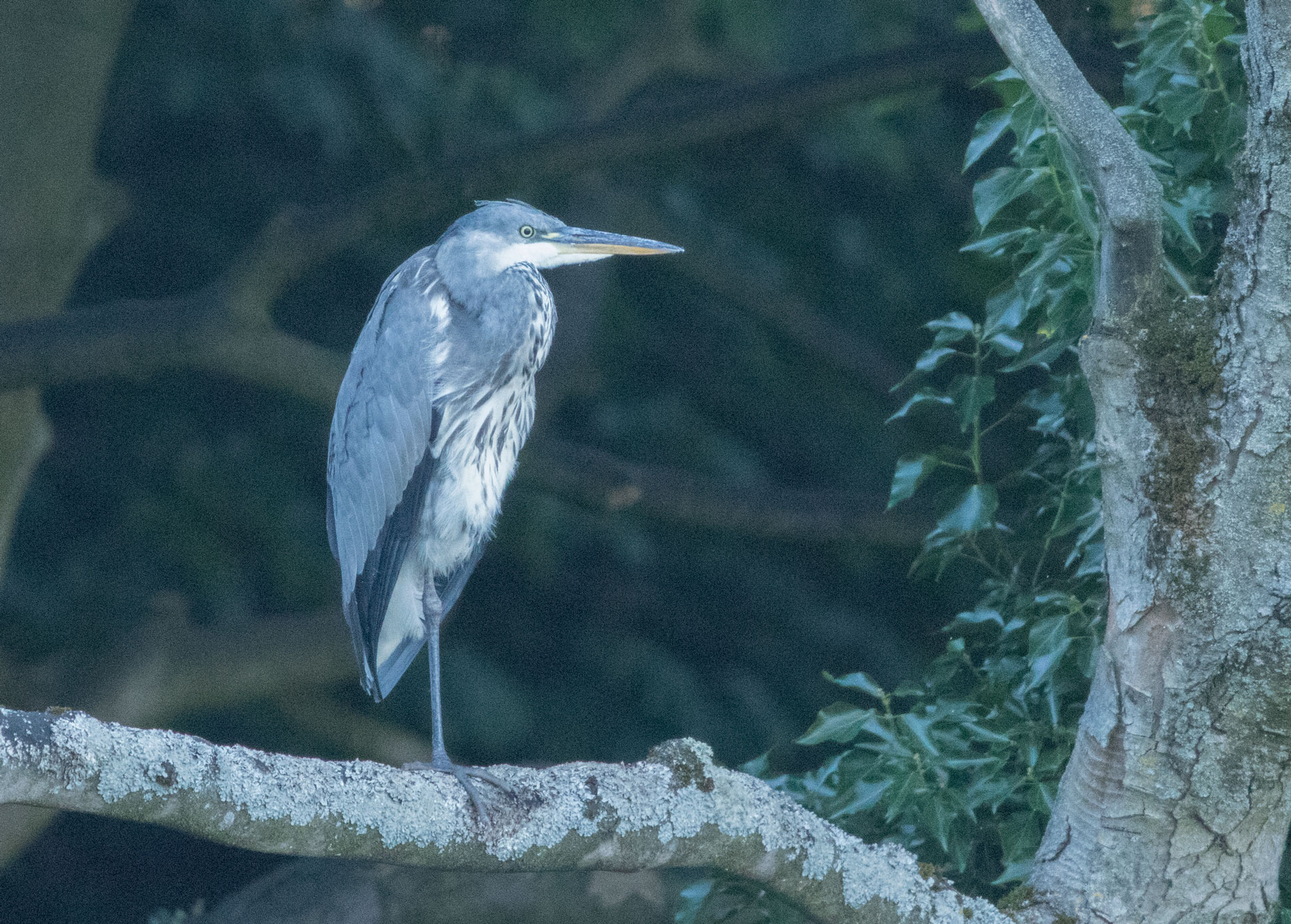
Herons fall within the order of Pelecaniformes along with storks and ibises. Grey herons are part of the Ardeidae family. Their Latin name is Ardea cinerea.
Herons retract their necks in flight, where storks fly with extended neck (Collins Bird Guide).

Collins Bird Guide shows the grey heron resident in Britain, France, the Netherlands and northern Germany, southern Scandinavia, and parts of Spain.
It also breeds further north and east, but tends to migrate south from there in winter. Its winter range includes Spain, Portugal, Italy and north Africa.
Herons are often seen in rivers, wading through the water, or standing very still looking for fish. They favour weirs. Also seen in lakes, ponds and canals, and at the coast.
Grey herons are 84-102cm from tip to tail (Collins Bird Guide). Their feathers are medium grey above and greyish white below. Adults have a white forehead (main photo) but juveniles a dark crown (heron in a tree under the heading 'classification'). The beak is dagger-shaped and more orange in colour when breeding.
Herons breed in colonies called heronries, building nests out of sticks high up in trees (Wikipedia). Eggs are incubated for 25 days, and chicks fledge at 7-8 weeks old. Grey herons typically live for 5 years.
There are plenty of places to see herons in Yorkshire. Here are a few examples:
Anywhere there's water and a chance of catching fish, you can see a grey heron. Early morning and evening are the best times of day.
Herons first appeared in the fossil record in the Paleogene period (66 to 23 million years ago) - Wikipedia. By 7 million years ago, birds closely resembling today's herons were fishing Earth's rivers.
In some cities in the Netherlands, herons co-exist with people. On canals in the UK, they may be used to people, but in more remote areas they are fearful of humans.
Ian D Rotherham's book The Lost Fens describes how the wetlands of Yorkshire, Lincolnshire and Cambridgeshire were drained and lost between 1600 and 1900. As an aside, he gives a recipe for heron from a 1917 cook book. "A heron if plain boiled for about eight hours becomes tender enough to afford a meal to a hungry person, and its flavour is only slightly fishy. It should be served with a thick white sauce flavoured with chopped parsley or fennel."
This may help explain why some herons are mistrustful of humans.
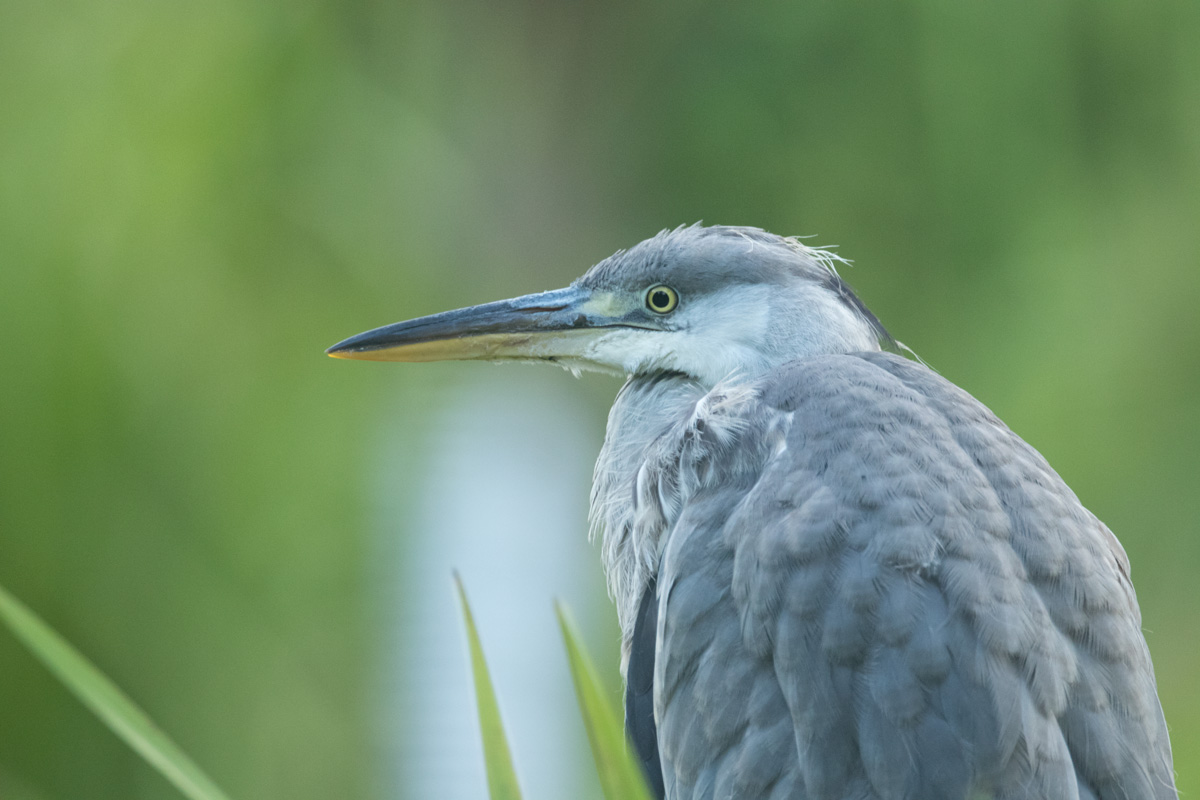
Herons eat fish, amphibians, small mammals, insects and juvenile birds such as ducklings (Wikipedia).
They regurgitate pellets of indigestible material like fur, bones and remains of insects.