

Toads are amphibians that can live for up to 12 years. They breed in ponds, but spend the rest of the year living in woodland or damp areas of gardens.

Toads are amphibians of the Order Anura (frogs and toads). They are members of the Bufonidae family, and the common toad's scientific name is Bufo bufo.
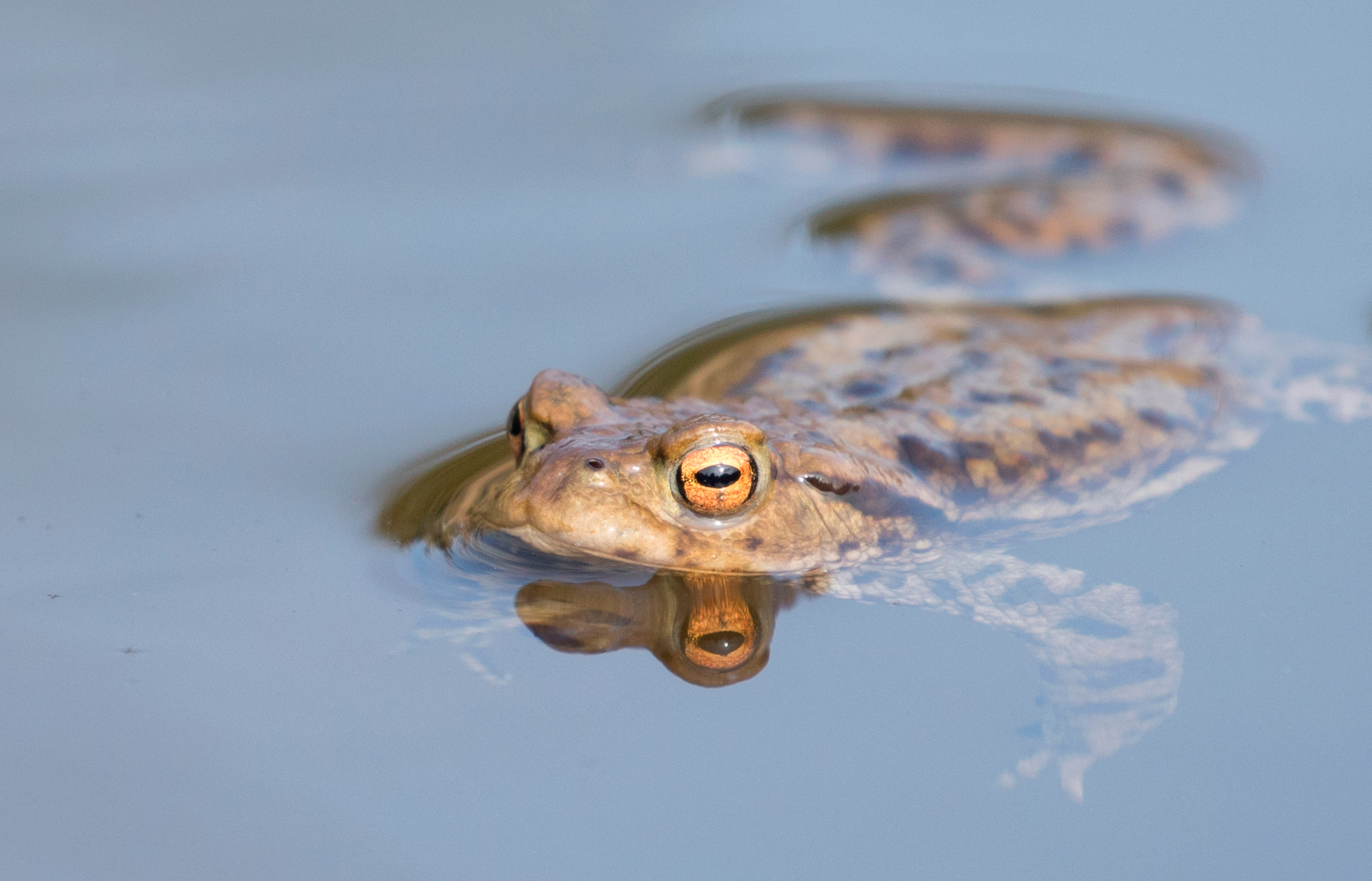
Toads are thought to have originated in South America about 78-98 million years ago (Wikipedia). They are native to every continent except Australia and Antarctica.

Toads have skin that is warty; it can vary in colour from dark brown to grey to olive green (RSPB). Toads have parotoid glands that produce a poisonous bufotoxin, which helps them avoid being eaten.
As well as the texture of the skin, you can tell toads apart from frogs because toads have crests behind their eyes.
At night toads forage for prey such as insect larvae, spiders, slugs and worms, then return to shallow burrows.
In Winter, they hibernate in deep leaf litter, log piles, or burrows.


Toads return to the same pond they were born in, in early Spring.
The male clutches the female from behind in a tight embrace, sometimes before the female has reached the pond. The male fertilises the triple-stranded strings of eggs the female lays in the water weeds.
Tadpoles hatch from the eggs after about 10 days.
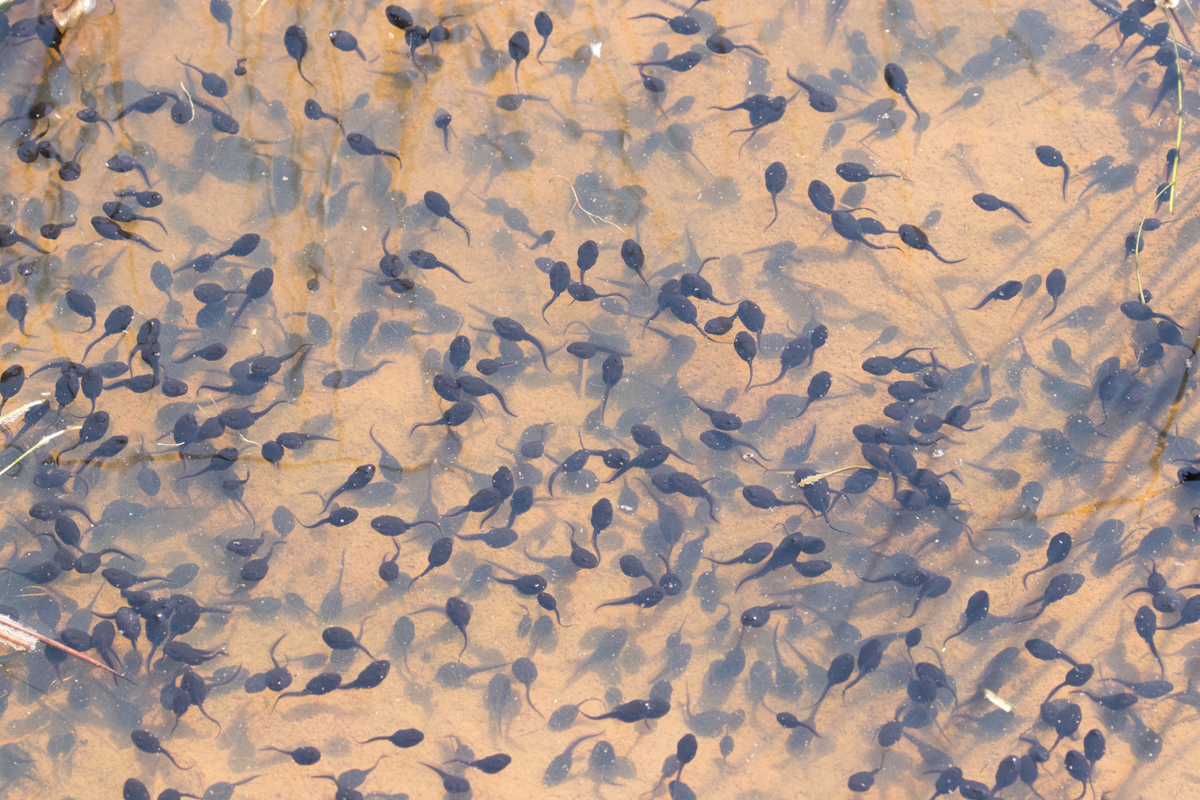
Tadpoles gradually metamorphose into toadlets over 2 or 3 months. Once they have grown legs, the toadlets leave the pond and walk or hop off into the surrounding habitat.

These are toads heading to a pond at Timble Ings in March 2022:

You might see a toad in your own garden, if you have one.
Otherwise, if you see toad tadpoles in a pond, it's a sure sign that toads were there and will be back next Spring - because toads instinctively return to the same ponds every year to breed.
I've seen toads at Timble Ings, near Swinsty and Fewston reservoirs.