Yellowhammers

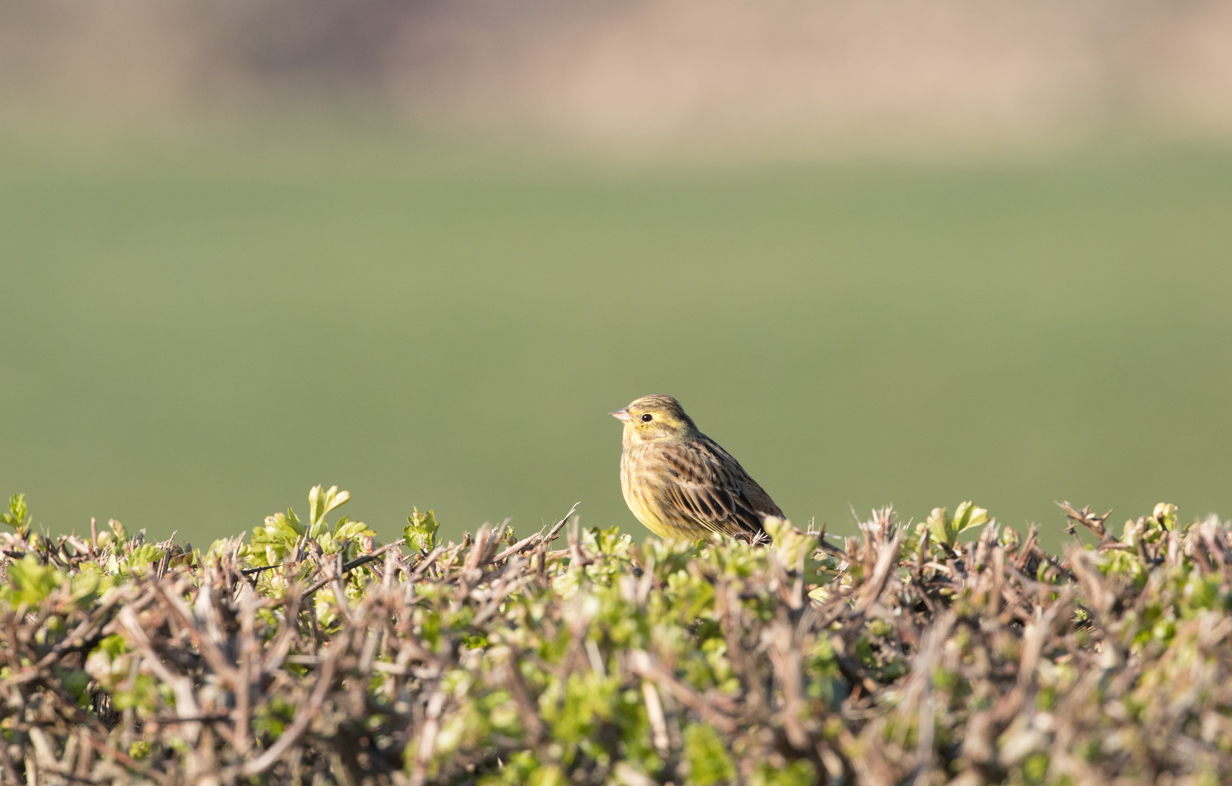
There are yellowhammers in Yorkshire, and they can be seen on farmland, in bushy areas and by woodland edge. This one was on a hedge by pasture near Fountains Abbey.
There are yellowhammers in Yorkshire, and they can be seen on farmland, in bushy areas and by woodland edge. This one was on a hedge by pasture near Fountains Abbey.

Yellowhammers are buntings. Their Latin name is Emberiza citrinella.
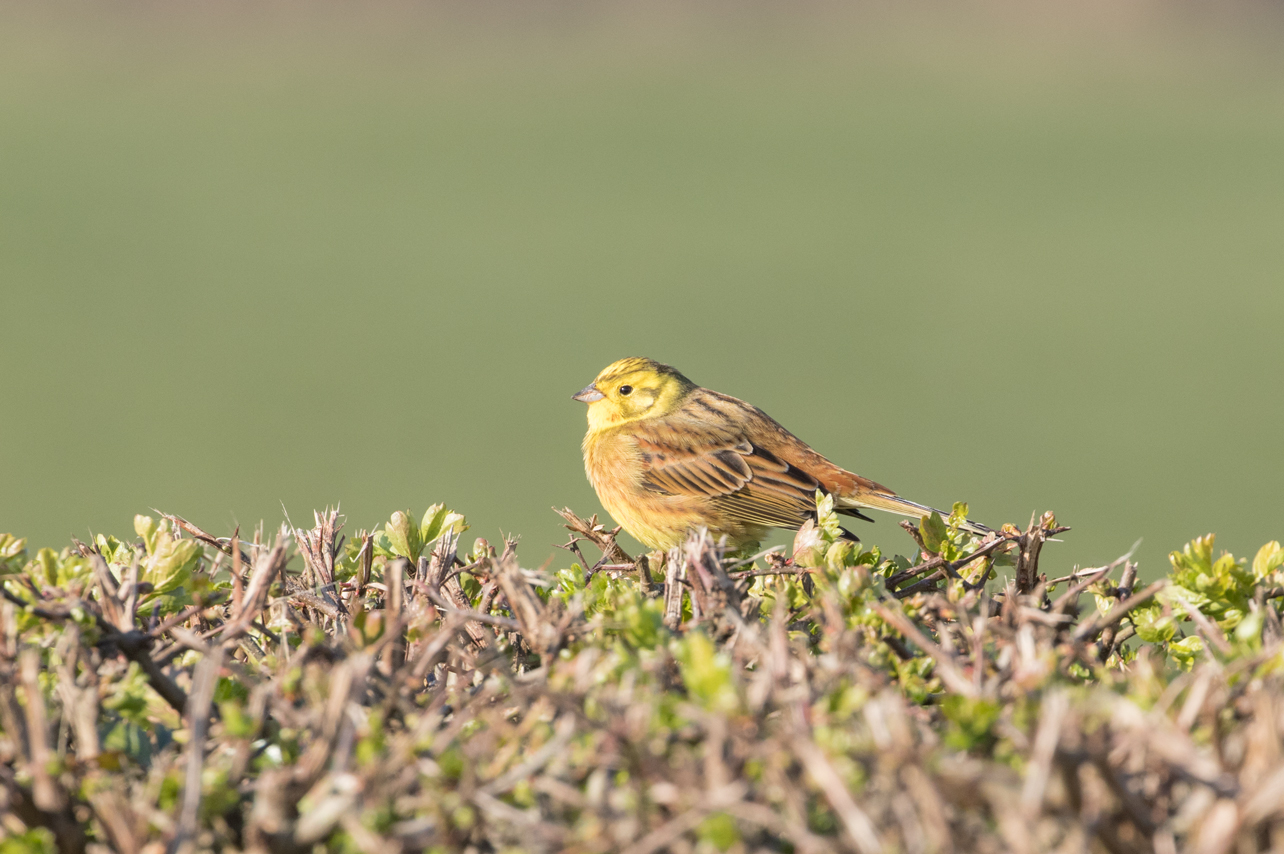
The males have bright yellow heads in summer.

Collins Bird Guide shows the yellowhammer resident in Britain and much of Europe.
It also breeds further north, in Scandinavia, but tends to migrate south from there in winter.
Yellowhammers are often seen in or on hedgerows. They feed on the ground in flocks outside the breeding season (Wikipedia).
According to Wikipedia, their song has a rhythm like 'a little bit of bread and no cheese'.
Yellowhammers begin breeding in April and May, and nest in a concealed location near the ground (Wikipedia). They can raise two or three broods each year. They typically live for 3 years.
Predators of eggs and young chicks include mice and other rodents, and crows. Predators of the adult bird include sparrowhawks.
One reliable to see yellowhammers is on hedge-lined country roads near Fountains Abbey - for example Watergate Road, which runs past Haddockstones and How Hill.
The males are colourful, with bright yellow heads especially in summer; in winter, the yellow colour is more subdued.
Females have less yellow and more grey-green plumage (Collins Bird Guide).
Yellowhammers are mainly seed eaters, although they eat invertebrates too in the breeding season (Wikipedia). During the first few days, chicks are exclusively fed invertebrate prey.
Yellowhammers' preferred seeds include nettle, docks, common knotgrass, common chickweed, wheat and oats.
Changes in agricultural practices have led to declines in populations in western Europe.